Book Categories:

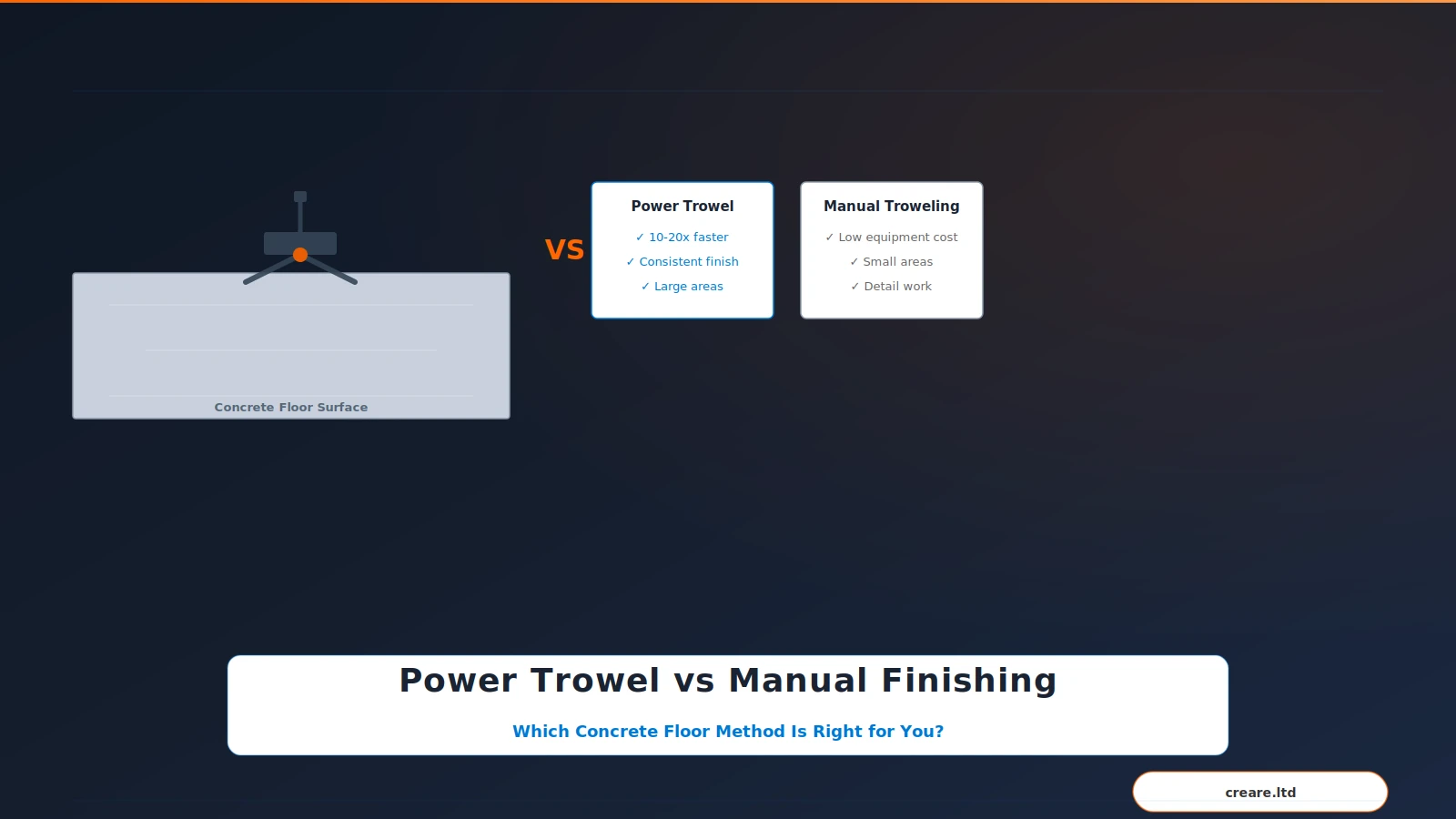



Concrete floor finishing is the final — and most visible — stage of any slab project. The choice between manual hand troweling and machine power troweling directly affects floor flatness, surface hardness, project timeline, and labor cost.
Henan Creare manufactures 4 power trowel models: three walk-behind gasoline units (800mm, 900mm, 1000mm) and one ride-on twin-rotor model (800GS). This guide helps project managers and contractors choose the right method and machine for their specific floor requirements.
Manual hand troweling — using a steel float and finishing trowel — is the traditional method. It still has valid use cases:
| Situation | Why Manual Works |
|---|---|
| Very small areas (under 50 m²) | Machine setup time exceeds finishing time |
| Edges and corners | Hand trowels reach where machines cannot |
| Decorative / textured finishes | Artisan control over surface pattern |
| Stair treads and narrow strips | No machine can fit these spaces |
Limitations: Manual troweling is physically demanding, slow (approximately 10-15 m² per hour per worker), and produces inconsistent flatness on larger slabs. For any floor over 100 m², a power trowel is strongly recommended.
Walk-behind power trowels are the most common type of concrete finishing machine. The operator walks behind the machine, controlling blade pitch and direction via the handle.
| Model | Blade Diameter | Coverage per Pass | Best For |
|---|---|---|---|
| DMR-800G | 800mm | ~2.0 m² | Small-medium floors, garages, basements |
| DMR-900G | 900mm | ~2.5 m² | Medium warehouses, commercial floors |
| DMR-1000G | 1000mm | ~3.1 m² | Large industrial floors, parking lots |
Larger blades = more coverage per pass = faster completion. However:
The DMR-800GS features twin 800mm rotors with the operator seated on top. This design offers several advantages over walk-behind models:
When to choose ride-on: Floor areas above 500 m², repeated commercial/industrial projects, or when floor flatness specifications (FF/FL numbers) are contractually required.
When to stick with walk-behind: Projects under 500 m², sites with stairs or difficult access, or when budget is the primary constraint (ride-on models cost 3-4x more).
All Creare power trowels use gasoline engines. This is the industry standard for concrete finishing for good reasons:
Creare uses reliable Honda-style OHV engines with recoil start and low-oil shutdown protection.
Timing is everything in concrete finishing:
Pro tip: Adjust blade pitch gradually. Too aggressive too early tears the surface. Too flat too late wastes time. Experienced operators develop a feel for the right pitch at each stage.
Browse Creare power trowels or contact us for a quote with factory-direct pricing and OEM options.