Book Categories:

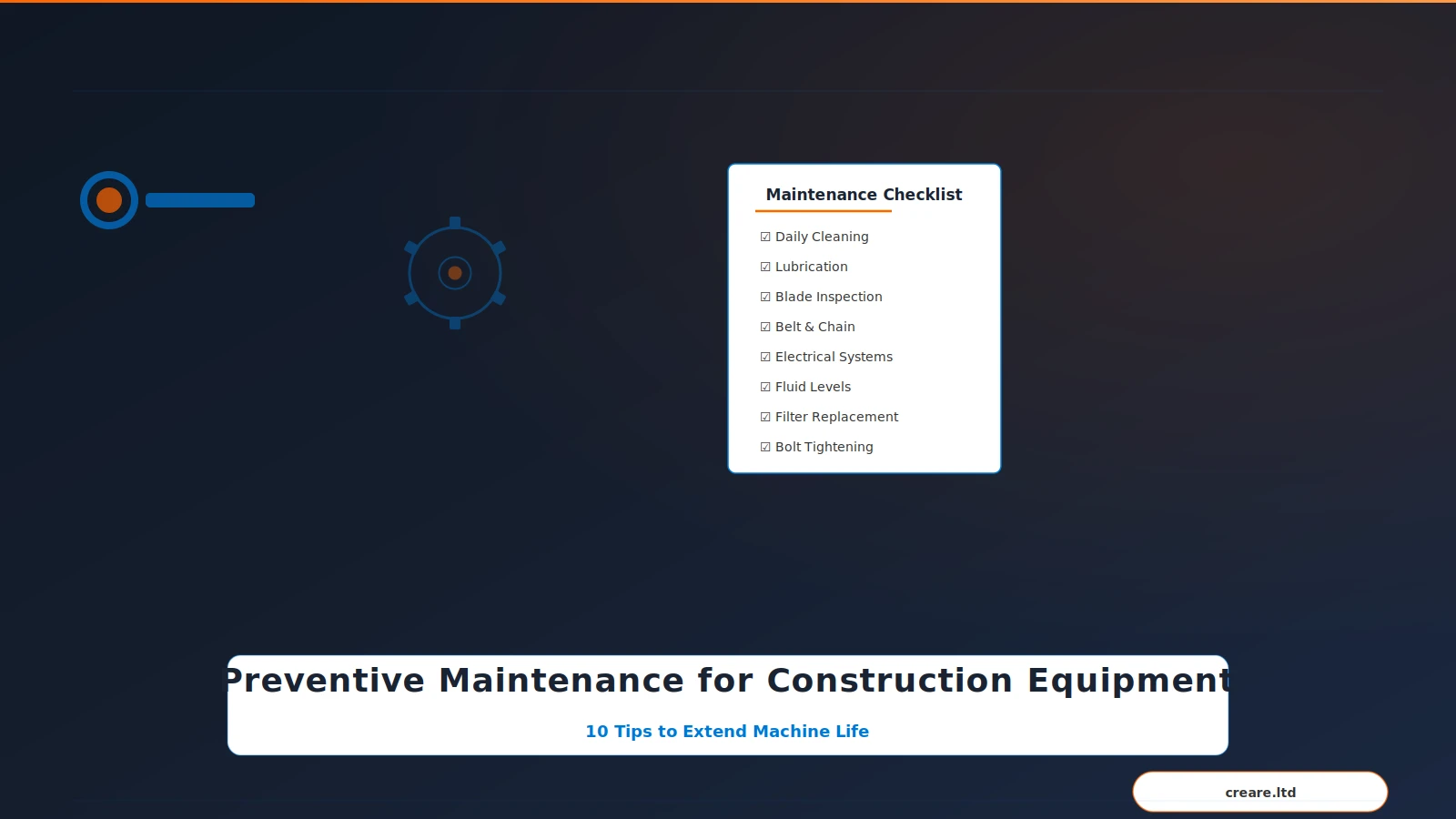



Construction equipment works in harsh conditions — concrete dust, rebar scale, vibration, moisture, and heavy loads. Without proper preventive maintenance, even the best-built machines will wear prematurely, leading to unexpected downtime, expensive repairs, and project delays.
At Henan Creare, we design our machinery for durability — but proper care multiplies that lifespan. Here are 10 essential maintenance practices that apply across all types of construction equipment, with specific guidance for rebar processing machines, concrete finishing equipment, and compaction tools.
After every shift, clean the machine. This sounds trivial, but it’s the #1 factor in preventing premature wear.
For rebar machines (straighteners, cutters, benders):
For concrete equipment (trowels, vibrators, grinders):
For compactors (plates, rammers):
Every Creare machine ships with a lubrication point diagram. Identify every grease nipple and oil point, then follow this schedule:
| Frequency | Lubrication Points |
|---|---|
| Daily | Cutting blade pivot, bending turntable center pin, straightening roller bearings (light oil) |
| Weekly | Gearbox oil level check, all grease nipples (2-3 pumps lithium grease), chain/belt tensioners |
| Monthly | Motor bearing grease (if equipped with grease fittings), full gearbox oil change inspection |
Critical rule: Over-greasing is as damaging as under-greasing. Excess grease breaks seals and attracts abrasive dirt. Two to three pumps per nipple is sufficient — stop when you feel resistance.
The cutting blades on rebar cutters and shears are wear items. Inspect every 500 cuts for:
For power trowel blades: rotate or replace when the working edge is worn down by 5mm or more. Uneven blades cause the trowel to “hop” and produce a wavy finish.
Loose drive belts slip, generating heat and reducing power transmission. Over-tightened belts overload bearings. Check belt tension every 50 operating hours: you should be able to depress the belt by 10-15mm at the midpoint between pulleys with moderate thumb pressure.
Chain drives (common on some bending machine transmissions) need lubrication and occasional tension adjustment. A loose chain can jump teeth, throwing off bending angle calibration.
Electrical failures account for 30-40% of construction equipment downtime. Monthly checks:
For gasoline-powered equipment (power trowels, compactors, rammers):
Never store gasoline-powered equipment with fuel in the tank for more than 30 days without a fuel stabilizer. Ethanol-blended fuel absorbs moisture and causes corrosion in the carburetor.
On steel bar straightening and cutting machines, the straightening rollers are the heart of the machine. Worn rollers cannot produce truly straight bar.
For plate compactors and tamping rammers, the base plate or ramming foot takes the most abuse:
If equipment will be idle for more than 30 days:
The single most valuable maintenance tool is a written log. Record:
A log helps you spot patterns (e.g., “blades lasting only half as long as before”) that indicate developing problems, and it’s invaluable when selling the machine — documented maintenance history increases resale value by 15-25%.
| Interval | Tasks |
|---|---|
| Daily | Clean debris, visual inspection, check oil level (engines), test emergency stop |
| Weekly | Grease all nipples, inspect blades/rollers, check belt tension, clean air filter |
| Monthly | Electrical terminal check, gearbox oil level, motor bearing inspection, full bolt torque check |
| Quarterly | Oil change (gasoline engines), spark plug inspection, roller rotation on straighteners |
| Annually | Full gearbox oil change, motor insulation test, eccentric weight inspection (compactors), major component wear assessment |
Most Creare machines are designed for 10,000+ operating hours with proper maintenance. Neglecting these simple practices can cut that lifespan in half — or worse, cause a catastrophic failure that injures an operator and halts your project.
Need replacement parts or maintenance advice? Contact Creare — we supply OEM spare parts for all our machine models with fast shipping from our factory in Henan, China.
This piece of writing will help the internet users for
creating new webpage or even a blog from start to
end.
Thanks for your reminder